




 Front-end
 Back-end
 Full Stack Developer
 Mobile
 Other
Other


 Company
 Contact Us
Remote UI/UX Design ServicesA Dedicated DesignerHourly or Monthly
A dedicated product designer at $2,000/mo - working in your Figma and your design system, handing off to your devs (or ours). UX research, wireframes, UI, design systems, prototypes, design QA - with a senior lead reviewing every release.

Years of Experience
Talented IT Professionals
Successful Projects
Clients
UI/UX Design From Empiric Infotech LLP
Last updated:
Empiric Infotech LLP gives you a remote dedicated product designer who works inside your Figma and your design system, hands off to your developers, and stays on the work month after month. Not a design agency that hands you a pretty Figma and disappears. Not a Dribbble freelancer who ships visuals nobody can build. Not a full-time hire who takes three months to land and a notice period to leave. Two ways to engage: book hours at $15/hr for a defined scope (a v1 design system, a flow redesign, a marketing-site rebrand, a usability pass), or lock a month at the standard $2,000 for 160-172 hours of full-time, exclusive design work when the product roadmap is a rolling thing. The designer works in your Figma org, your design system (or builds one with you), your repo where the components live, and your tooling (Linear, Jira, Notion, Slack). We deliver UX research and discovery, wireframes, high-fidelity UI, interactive prototypes, a design system in Figma with components your devs can ship, design tokens exported to code, design QA against the shipped product, and accessibility (WCAG 2.2) baked in. A senior lead reviews every release. When the build needs both a designer and developers in the same engagement, you add developers at the same flat $2,000/month per seat - in 48 hours, with no re-contracting. If your need is straight code, see /services/web-development-company or /services/software-development-agency.
What a UI/UX design engagement delivers
Not a pretty Figma you cannot build. A design that ships in your product, week after week, with the design system, the dev-handoff discipline, and the accessibility work that turns a pretty mockup into a real product.
A product designer in your Figma, not an outsider lobbing files in
The designer joins your Figma org, your Slack, your Linear or Jira, and your design system (or builds one with you). Daily standups, weekly demos, work in branches your team can review. No black-box agency reveal at the end of the month.
UX research and discovery that actually changes the design
User interviews, journey maps, usability testing on the current product, competitive teardowns, and a research synthesis your PM can act on. Not a hundred-slide deck that nobody reads - a short, opinionated write-up with the three things to fix and the one thing to try.
Wireframes, high-fidelity UI, and prototypes that match your brand
Low-fi wireframes for fast iteration, high-fidelity UI on your design system, click-through Figma prototypes for stakeholder review and user testing, and a tight feedback loop with your PM and engineers. Versioned in Figma, tracked in Linear or Jira, shipped to staging behind a flag.
A design system your developers can actually ship
Component library in Figma with proper variants, properties, and constraints. Design tokens exported to code (CSS variables, Tailwind tokens, or a token JSON your build system consumes). Documentation that lives next to the components, not in a separate Confluence page nobody updates. A design system that makes the next feature faster, not slower.
Dev handoff, not a Figma file thrown over the wall
The designer pairs with your developers (or ours) during the build: clarifies edge cases on the fly, reviews the implementation in your staging environment, opens design-QA tickets where the build drifts, and updates Figma when reality forces a change. The component in code matches the component in Figma, and stays matched.
Accessibility and responsive design, not retrofitted
WCAG 2.2 AA targeted from the first wireframe - colour contrast, focus states, keyboard navigation, screen-reader semantics, touch targets, motion preferences. Responsive design from XS to 4K, not a desktop comp scaled down. The accessibility work happens in Figma, not as a remediation pass two weeks before launch.
A designer who is still there next month
Your product evolves, your design system grows, your usability tests surface new things to fix. A dedicated engagement means the same designer ships the next flow, owns the design system, and keeps the cohesion across releases - instead of a one-off rebrand that ages out in a quarter.
How we scope a UI/UX design engagement
No multi-week sales cycle and no twenty-page statement of work. A call, a written scope, a trial, then hourly or monthly - your call.
A scoping call
Thirty to forty-five minutes. You tell us the product, the design surface that needs work first, your existing design system (if any), the tooling (Figma org, Linear or Jira, repo), and what would count as a real outcome - a higher activation rate, fewer support tickets on a confusing flow, a usability score, a brand refresh shipped on time. No charge, no obligation.
A written scope and team proposal
We send back the design scope (the surfaces, the research, the deliverables, the design-system work), the tooling we would use, the dev-handoff plan, the accessibility target, who we would put on it - one designer to start, or a designer plus a developer when the build is part of the engagement - and the price both ways. We will tell you honestly when a UX research sprint beats a redesign, or when a design-system pass beats more visuals.
A 7-day risk-free trial (on the monthly plan)
The designer gets into your Figma and your tooling and ships the first slice - a wireframe set or a redesigned flow or a starter design system, reviewed and tested in your existing product - inside the first week. If it is not a fit by day 7, full refund on the monthly plan, no debate. On the hourly plan, you have already seen what an hour buys.
Hourly or monthly, your choice
Hourly: billed by the hour at $15, time tracked to the minute, a weekly time report and a demo, stop any time - best for a defined scope (a v1 design system, a flow redesign, a marketing-site rebrand, a usability pass). Monthly: 160-172 hours at the standard $2,000, monthly billing, cancel with 7 days notice - the better value when the product roadmap is a rolling thing. Switch between them month to month; add a developer at the same rate when the engagement needs build hands too.
A dedicated product designer for $2,000 per month
One dedicated product designer is $2,000 per month for 160-172 hours of full-time, exclusive design work in your Figma and your tooling, with a senior lead reviewing every release. Hourly is $15 (struck from a 20% discount on the standard $2,400 monthly retainer, by the hour rate) - best for a defined scope like a v1 design system, a flow redesign, or a usability pass. Either way: design tokens exported to code, accessibility baked in, dev handoff that holds. Need build hands as well? Add a developer at the same flat $2,000 per month each. Billed monthly, 7-day risk-free trial, no setup fee, no recruitment fee.
Hourly plan
- A dedicated developer, exclusive to you while you have hours booked
- Pay as you go - billed by the hour, time tracked, a weekly report
- Best for short, defined work; no monthly commitment
- Code review and pre-delivery testing by a senior lead, built in
Monthly plan
- A dedicated developer, full-time and exclusive - 160-172 hours a month
- The best value for an ongoing engagement
- Your repo, your cloud account, your tools
- Code review and pre-delivery testing by a senior lead on every release
- 7-day risk-free trial, monthly billing, cancel with 7 days notice
Dedicated team
- A dedicated team - developers plus a senior team lead who reviews and tests every release
- Add a developer (and a designer where the build needs UI/UX work) at the same rate
- Best for long-term, multi-track work; add a developer in 48 hours, no re-contracting
What the first 90 days of a UI/UX engagement look like
Whether you are booking hours or on the monthly plan, the shape is the same. Here is a typical first three months on a design engagement.
- Week 1
Onboarding and the first design slice
Figma org, Slack, Linear or Jira access, the existing design system reviewed (or a starter set proposed if there is none), the first surface scoped, and a first slice live - wireframes for the priority flow, or a starter design system, or a usability findings doc - shipped and reviewed. On the monthly plan, day 7 is the risk-free decision point.
- Month 1
Design shipped, build pairing started
The priority flow redesigned end to end, high-fidelity UI in Figma matching the design system, design tokens exported, an interactive prototype for stakeholder and user review, dev handoff started with the engineers (yours or ours), and the first design-QA pass on the implementation in staging. By the end of month one, a real surface is better in production.
- Month 2
The design system, the second flow, accessibility pass
Design system gaps filled (components, variants, tokens, docs), the second priority flow redesigned, an accessibility pass on the shipped work (WCAG 2.2 AA), a usability test on the live redesign, and the design-QA cadence in place so the gap between Figma and production stays small.
- Month 3 and on
Brand cohesion, design ops, and ahead of the roadmap
A brand-cohesion pass across surfaces, design-system documentation tightened so new engineers can self-serve, the next flow or feature scoped from research not guesswork, a regression pass on the design system, and the next batch of work scoped. From here the designer is ahead of the product roadmap on the design.
A dedicated product designer - hourly or monthly - vs a fixed-price design agency, a Dribbble freelancer, or hiring in-house
| Empiric Infotech (dedicated designer - hourly or monthly) | Fixed-price design agency | Dribbble or Upwork freelancer | Hire an in-house designer | |
|---|---|---|---|---|
| What you actually get | A product designer in your Figma and your tooling, working with your devs, owned by you, with the same person on the design month after month | A pretty Figma at the end of the engagement, then a maintenance retainer or you are on your own | Visuals to a brief; design-system thinking and dev handoff are on you | Whatever your team can ship; usually a long ramp and a hand-off cliff when they leave |
| Pricing model | $15/hr for hourly work, or the standard $2,000/mo for a full-time designer if you lock a month - your choice | $8K-$60K fixed bid per design engagement; change orders billed extra | $20-$120/hr; quality varies wildly; scope creep comes out of your budget | $70K-$130K salary + benefits + payroll tax + equipment - and rarely a full-time job on its own |
| Where the design lives | In your Figma org, your design system, with dev handoff in your repo and your tooling | Per the agency's process - often in their Figma until handoff | Wherever the freelancer prefers - usually their Figma until you ask | In your Figma |
| Dev handoff | The designer pairs with engineers, opens design-QA tickets, updates Figma when reality forces a change | Per the spec; a new dev-handoff round is a change order | Whatever the freelancer offers - often a Figma file and good luck | Standard for the role, if the role has time |
| Design system and tokens | We build the design system and export tokens to code so the next feature is faster, not slower | Per the spec; a new system or tokens are change orders | Rarely included; usually a one-off visual | Built over time, if there is time |
| Accessibility (WCAG 2.2 AA) | Targeted from the first wireframe - colour contrast, focus states, keyboard, screen reader, motion | Per the spec; usually a remediation pass at the end | Often skipped unless you ask explicitly | Standard for the role, if the role has time |
| Quality control | A senior lead reviews every release before it goes live - built in, no extra charge | Per agency - often the same people who built it | On you to review and verify | Your own review process, if you have one |
| When the product changes | The same designer ships the next flow - book an hour, or it is in the monthly plan | A support ticket, or a new maintenance retainer | Re-hire the freelancer, or it stays stale | Whoever is on the team |
| Time to start | 48 hours | 2-6 weeks (proposal, SOW, kickoff) | Days (post a job, review, interview) | 2-4 months (sourcing, interviewing, notice period) |
Figures are typical market ranges, not quotes. A fixed-price agency design engagement commonly lands in the $8K-$60K range before change orders, depending on the scope, the research, and the number of surfaces.
Working hours and meeting availability
Our designers work 09:30 AM to 07:30 PM IST, Monday to Friday. A project manager is reachable 07:30 AM to 10:30 PM IST. Live overlap by region:
| Region | Developer live overlap | PM available for meetings | What this means |
|---|---|---|---|
| USA East (ET) | 1 hr 9:00-10:00 AM ET | 9:00 PM previous day - 12:30 PM ET | Morning standup and Figma review, then most of a working day's design work shipped before your day starts. |
| UK and Ireland (GMT/BST) | 5-6 hr 9:00 AM - 2:00 PM | Full UK working day | Live Figma walkthroughs, usability reviews, and design pairing across the morning. |
| Western Europe (CET/CEST) | 6-7 hr 9:00 AM - 4:00 PM | Full CET working day | Effectively a same-time-zone working relationship - live design, pairing, and review through most of the day. |
| Sydney and Melbourne (AEST/AEDT) | 3.5 hr 2:00 - 5:30 PM AEST | 12:00 noon - 3:00 AM next day AEST | Afternoon standup and live design review, then overnight Figma work and dev handoffs. |
Why teams hire a dedicated product designer, not a fixed-price agency
What ends up in production rarely matches the Figma a freelancer hands off - the tokens never make it into code, the components your developers actually have do not match the spec, and the accessibility pass gets bolted on after release. A fully loaded in-house product designer is roughly $7,500 to $11,000 a month once you add benefits, payroll tax, and equipment, and the role often sits idle between sprints, or overflows when a redesign lands. A fixed-price design agency typically runs $8,000 to $60,000 per engagement before the first change order, and the relationship ends when the SOW closes. Empiric Infotech is billed two ways - $15 an hour for a defined scope, or the standard $2,000 a month per designer for 160-172 hours of full-time, exclusive work - with the same person on your product the next month and the month after, and a senior lead reviewing every release at no extra cost.
Most design engagements fail in the same places: a beautiful Figma your developers cannot build because the components do not exist; a design system that nobody updates because the agency left; tokens that live in Figma but never make it into code; an accessibility pass tacked on at the end; a freelancer who ships visuals on a brief but cannot scope the next thing; a full-time designer who takes a quarter to land and a quarter to leave. A dedicated Empiric designer has shipped product UI for B2B SaaS, consumer, and product teams - and works inside your tooling, not theirs.
We have shipped web and mobile products since 2014. The depth shows up in the parts a quickstart skips: a design system the engineers actually consume, tokens exported to code, accessibility built into the wireframes, dev handoff that holds when the implementation differs, design QA on staging, and the honesty to say when a research sprint beats a redesign or a design-system pass beats more visuals.
Recent product and design-led work
Roamate - a design-led travel platform
A solo travel companion platform built for a USA founder by an Empiric Infotech team - the Flutter app, the web surface, and the UI design behind both. Real product design work, shipped to real users.
Read case studyVelvet Passport - a consumer product designed end to end
A US consumer product built for a USA founder by an Empiric Infotech team. The shape of design work this page covers - product UI, brand cohesion, dev handoff.
Read case studyVedu - EdTech UI for a German audience
An AI-powered German language learning product built for a German client by a two-person Empiric Infotech team - the Flutter app UI, the flashcard and quiz design, and the integration work behind them.
Read case studyReady to ship better product design?
Tell us the surface that needs design first, your existing design system (if any), your tooling, and what would count as a real outcome - a higher activation rate, fewer support tickets on a confusing flow, a brand refresh shipped on time. Within 24 hours we will send back a design scope, a research and deliverables plan, a dev-handoff approach, a team proposal, and an estimate both ways - hours per surface or what a month covers. Your designer starts inside 48 hours, and a senior lead reviews and tests everything before it reaches you.
Why UI/UX Design Services?
A great product isn’t just about functionality, it’s about how it feels to use. That’s where UI/UX design services come in. User Interface (UI) and User Experience (UX) design work together to create digital experiences that are intuitive, engaging, and enjoyable. Whether it’s a website, mobile app, or software platform, well-designed UI/UX ensures that users can easily navigate, interact, and achieve their goals.
Investing in professional UI/UX design services is about putting your users first. It’s about creating a product that doesn’t just look good but works seamlessly, meeting their expectations and making every interaction memorable. A strong design doesn’t just attract users but it retains them, builds trust, and drives results for your business.
Our UI/UX Design Services
Are you looking for a UI/UX designer who can help you create an outstanding user experience for your website or app?
As a Top UI/UX Design Agency, we have a team of designers who are highly skilled in a range of design tools and software, including Figma, Adobe Photoshop, Adobe XD, Illustrator, After Effect, and Premiere Pro. We stay up-to-date with the latest design trends and techniques, ensuring that our clients receive cutting-edge designs that stand out from the competition.
Whether you need a full website redesign, a new mobile app interface, or just some tweaks to your existing design, our team is here to help. We take a collaborative approach to our work, working closely with our clients to ensure that their vision is fully realized in our designs.

Custom Web Designing
Our Custom Web Design services are designed to help businesses create effective websites that deliver results. We design a website that is tailored to meet specific needs and objectives, and that delivers a seamless user experience that drives engagement and revenue growth.

Mobile App Design
Our customer-centric approach helps us to provide top-class mobile app designing services. We design mobile apps that are visually appealing, intuitive to use, and optimized for user engagement and conversion.

Logo Design Services
We know that a logo is the identity of a successful brand. Our Logo Design Services are designed to help businesses establish a strong brand identity and stand out in their respective markets. Our Logo designers ensure that your logo represents your business in the best possible way.
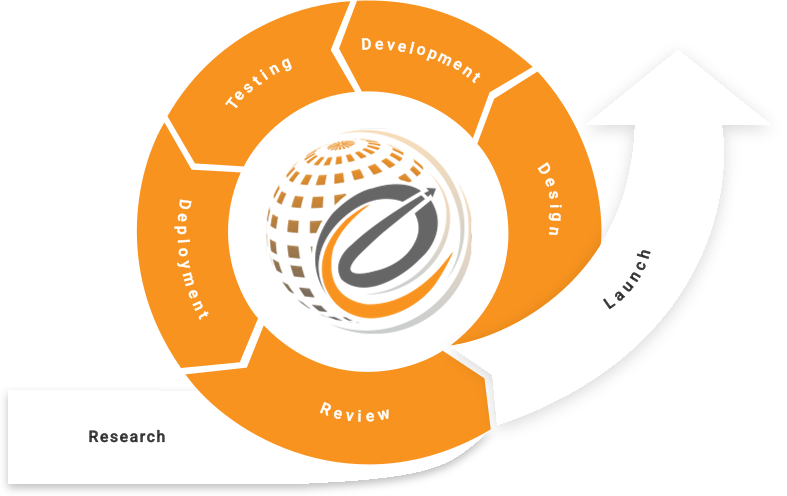
The Value We Offer To Our Clients

 Ethical Solutions
 Client Value
 Awesome Ideas
 Diversity
Our Hiring and Engagement Model
Dedicated Resources
Hourly Basis

How to Hire UI/UX Designer from Empiric Infotech LLP
As a leading UI/UX designing company in the USA, Empiric Infotech LLP simplified the process of hiring UI/UX designers. You can hire designers in 3 simple steps: Request, Interview, and Hire.
STEP 01
Request
Share your requirements
STEP 02
Interview
Take developer’s interview
STEP 03
Hire
Start risk-free work
Reviews


Frequently Asked Questions (FAQs)
Is the designer dedicated to my product, or split across clients?
How much does UI/UX design cost - hourly or monthly?
Do you work in our Figma, or your Figma?
What about design tokens and dev handoff?
Can you bring developers too, not just a designer?
How does accessibility (WCAG) work?
What about brand work - is that in scope?
Who owns the design files?
How fast can you start, and what if it is not working out?
GET A QUOTE NOW
Tell us about your challenges, and we’ll come up with a viable solution!
Other Services
We provide comprehensive IT solutions to help businesses stay competitive and innovative in today's digital world.


